
Kitchen setup and equipment
We supply and install commercial cooking equipment and set out the kitchen so the cooking line, preparation and wash areas work as a sequence.
EXCELLO!!! Always Making The Difference…
Industrial and Commercial Kitchens
A commercial kitchen is a gas installation, a ventilation system and a fire protection system operating in a small space. We build all three together, for restaurants, hotels, institutions and food production facilities across Ghana.
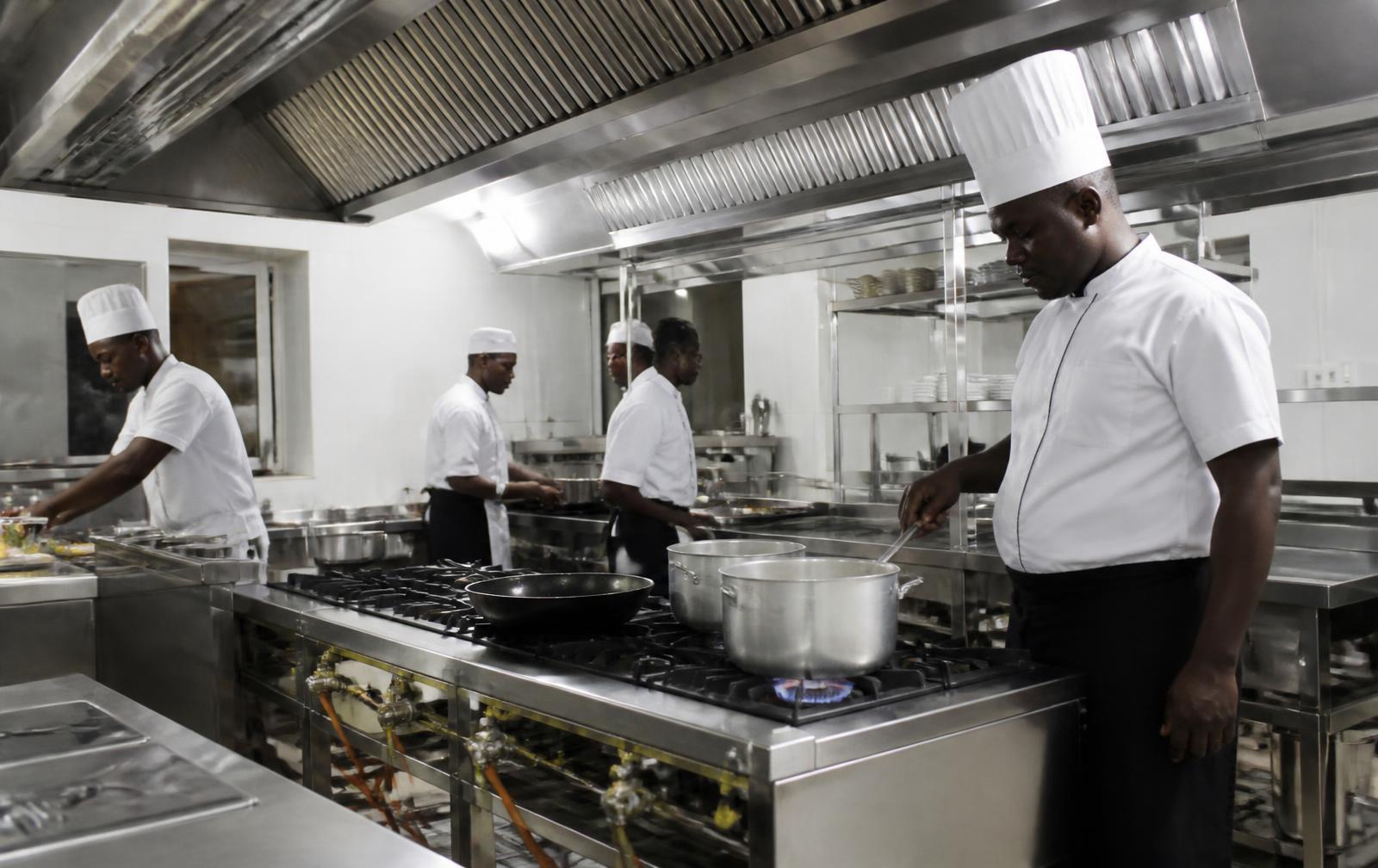
Most kitchen problems we are called to are not equipment faults. They come from extraction that cannot handle the cooking line, gas piping added after the layout was fixed, or suppression that does not cover the appliances actually in use.
We prefer to be involved while the kitchen is still on paper. That way the hood, appliance positions, gas route and suppression nozzles are set out once. Where the kitchen already exists, we assess what is there and upgrade in a sequence that keeps the business trading.
Excello supplies and installs the equipment, fabricates and installs stainless steel hoods, runs the LPG piping with electronic leak safety devices, and designs and installs the fire suppression that protects the cooking line.
What we deliver
We supply and install commercial cooking equipment and set out the kitchen so the cooking line, preparation and wash areas work as a sequence.
Stainless steel hood fabrication and installation, with extraction sized for the cooking line. We also handle hood cleaning as part of maintenance.
Gas piping from the storage point to each appliance, with regulators, isolation and electronic gas leak safety devices that cut supply when a leak is detected.
Automatic kitchen fire suppression systems (KFSS) designed for the hood and cooking line, together with wider commercial kitchen fire protection design.
Semi annual fire system maintenance inspection and hydrostatic testing of cylinders, so equipment is verified rather than assumed to work.
General servicing of gas equipment, leak repair and upgrading of fire protection systems already installed in the kitchen.
Who we work with
Cooking volume and service pattern change the design more than the type of business does.
Kitchens that run long service hours in limited space, where equipment layout, extraction and gas supply have to work together.
Multiple outlets and banqueting kitchens served from one gas installation, with fire protection appropriate to each cooking line.
Event caterers and food operations needing production capacity, safe gas supply and equipment that can be serviced.
Schools, hostels and staff canteens cooking at volume, where reliability and straightforward maintenance matter most.
Bakeries and food processing units with continuous cooking loads and higher extraction requirements.
Any facility with a professional kitchen that needs the gas, ventilation and fire systems engineered rather than assembled.
Process
Select a stage to see what it involves.
We visit the kitchen or review the drawings, look at the menu and cooking volume, and note the space, ventilation and gas constraints.
Safety
Related
FAQs
Tell us the menu, the cooking volume and the space you have. We will come back with what the gas, ventilation and fire systems need to be.