
Cylinder handling in busy spaces
Kitchens and workshops that depend on loose cylinders lose space, lose time and carry avoidable risk. A piped system moves storage outside and delivers gas where it is used.
EXCELLO!!! Always Making The Difference…
LPG and Gas Engineering
We build the gas infrastructure behind homes, kitchens, hotels and industrial facilities in Ghana. That covers tank installation, piping, testing and certification support, with one team accountable from design to commissioning.
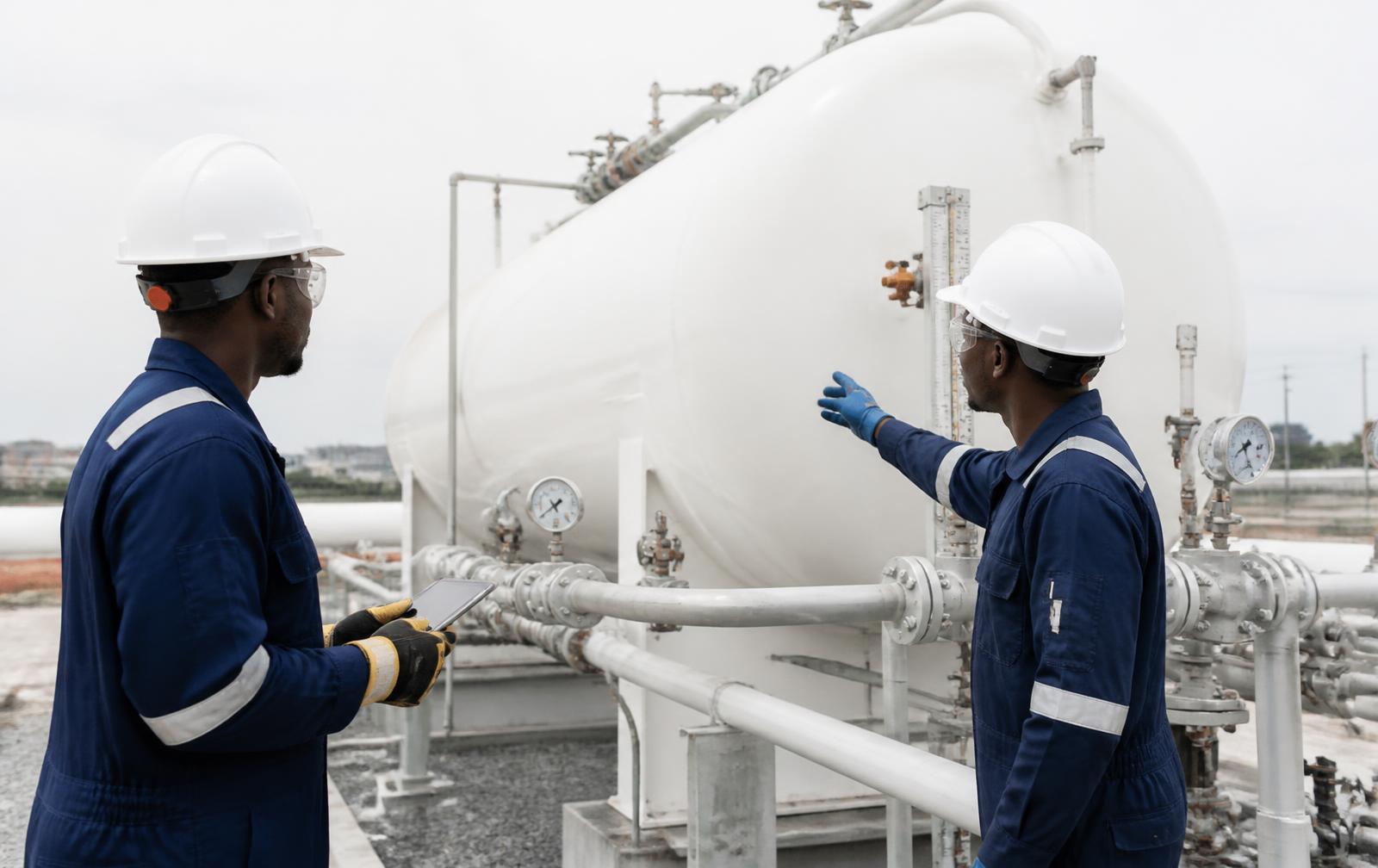
LPG is now the working fuel for a large share of Ghanaian kitchens, hotels and small industry. The equipment is well understood, but the installation around it is where projects succeed or fail. Pipe sizing, tank siting, ventilation, isolation and testing all decide whether a system runs quietly for years or becomes a recurring problem.
Excello handles that engineering work directly. We install underground and aboveground LPG tanks, run gas piping for residential, commercial and industrial buildings, test and support certification of completed work, and supervise LPG projects from feasibility through commissioning. Where an existing system has reached the end of its service life we handle renovation, refurbishment and decommissioning.
Work is carried out by field engineers under departmental heads and area supervisors, so there is a named person responsible for the quality of the installation on site.
The problem
Most of the LPG problems we see on site come from a small number of avoidable causes.
Kitchens and workshops that depend on loose cylinders lose space, lose time and carry avoidable risk. A piped system moves storage outside and delivers gas where it is used.
Undersized pipe, poor tank siting and missing isolation points cause pressure problems and make later maintenance difficult. We size and set out the system before installation begins.
Facilities are often unable to show that an installation was pressure tested. We test, document and support the certification the facility needs.
Older vessels and steel lines eventually need renovation, refurbishment or decommissioning. That work needs planning rather than improvisation.
How a piped system works
Select a stage to see what it does. No engineering background needed.
Stage 1 of 5
Gas is stored in a tank or cylinder bank sited away from the building, with the separation, ventilation and access an installation needs. Nothing is stored in the kitchen.
Simplified illustration of how a piped LPG system is arranged. Actual layouts are designed per site and are not a construction specification.
Applications
Select a category to see the typical scope.
For a private home we take gas out of the kitchen and into a properly sited tank or cylinder bank, then pipe it back in through concealed lines to the cooker and water heater points.
Our process
Select a stage to see what it involves.
We survey the site, note access, ventilation and separation distances, and confirm the gas load the installation has to carry.
Safety
LPG is safe when it is contained, ventilated, monitored and maintained. Each of those is an engineering decision made long before the gas is turned on.
Related
FAQs
Send us the drawings or a description of the site. We will tell you what the installation involves and what it needs to satisfy before you commit to it.